Statements
STATEMENTS
Statements are issued by the assessment committees operating at the Centre, in accordance with the rules laid down in the Regulation of the Minister of National Education of 2 March 2026 on statements and opinions issued by assessment committees operating in public psychological and pedagogical counselling centres (Dz.U. 2026 r., poz. 428).
The assessment committees issue statements and opinions for children and pupils attending kindergartens, schools and educational centres in the Centre's catchment area. For children and young people who do not attend a kindergarten, school or educational centre, statements are issued by the committees at the counselling centres responsible for their place of residence.
WHAT STATEMENTS DO PSYCHOLOGICAL AND PEDAGOGICAL COUNSELLING CENTRES ISSUE?
- Statements recommending an individualised preschool preparatory year (for a period of no less than 30 days and no longer than 1 school year) - for children whose health makes it impossible or significantly difficult for them to attend kindergarten;
- Statements recommending individualised learning (for a period of no less than 30 days and no longer than 1 school year) - for pupils whose health makes it impossible or significantly difficult for them to attend school;
- Statements on the need to provide special education (for the period of preschool education, a school year or an educational stage) for children/pupils:
- with disabilities (deaf, hard of hearing, blind, partially sighted) - issued by the TOP Counselling Centre,
- with motor disabilities, including aphasia; with mild, moderate or severe intellectual disabilities; with autism, including Asperger's syndrome; with multiple disabilities - Counselling Centre No. 16,
- at risk of social maladjustment - Counselling Centre No. 16;
- socially maladjusted - Counselling Centre No. 16;
- Statements recommending rehabilitation-and-education classes (for a period of no longer than 5 school years) for children and young people with profound intellectual disabilities.
The assessment committees also issue opinions on the need for early childhood development support for children with disabilities * (from the moment a disability is detected until the child starts school).
* PLEASE NOTE!
Opinions on the need for early childhood development support (WWRD) and statements for blind and partially sighted, deaf and hard of hearing children are issued by the TOP Specialist Psychological and Pedagogical Counselling Centre (ul.Raszyńska 8/10, tel. 22 822 77 17).
HOW CAN YOU OBTAIN A STATEMENT OR AN OPINION ON THE NEED FOR EARLY CHILDHOOD DEVELOPMENT SUPPORT?
- Booking an appointment at the Centre with the specialist who looks after the institution your child attends, in order to identify the child's current needs, analyse the documentation supporting the application (medical/psychological/speech therapy documents, an opinion from the institution, etc.) and plan the necessary assessments.
- If your child has been assessed at another psychological and pedagogical counselling centre, you should apply to that centre to have the documentation transferred to Counselling Centre No. 16.
- Consultation and assessment (several assessment sessions with different specialists may be needed). The parent gathers the documents required for the statement to be issued - a medical certificate, an opinion from the school and other documents relevant to the case.
- Once the assessments have been completed, the results are discussed, the application is submitted to the assessment committee and the parent is informed when the committee will meet and consider the application.
- Meeting of the assessment committee and issue of the statement.
The statement on the need to provide special education, the statement recommending rehabilitation-and-education classes and the opinion on the need for early childhood development support are issued no later than 30 days from the date on which the application is submitted or the missing documentation is supplied.
All the necessary application forms can be found in the Documents section.
Information for parents, teachers and form tutors
To understand the developmental and educational needs of children and pupils as fully as possible, we encourage parents, teachers, form tutors and specialists to use the free tools available on the Educational and Specialist Support Portal (Portal Wsparcia Edukacyjno-Specjalistycznego).
We invite parents to use the tools for parents, which can help them observe their child day to day and notice the child's strengths, difficulties and areas that need support:
https://wsparcie.gov.pl/narzedzia-dla-rodzicow/
We encourage teachers, form tutors and school specialists to use the screening tools, which support the observation of how a child or pupil functions in the kindergarten and school environment:
https://wsparcie.gov.pl/narzedzia-przesiewowe/
Using these tools can make it easier to prepare for a consultation at the counselling centre or a conversation with a specialist, and to plan appropriate forms of support for the child or pupil.
We would like to stress that the tools are intended for support and screening - they do not replace the assessment carried out by the specialists of a psychological and pedagogical counselling centre, but they can be a valuable first step in recognising a child's needs.
Required documents
Documents required to apply for a statement on the need to provide special education, a statement recommending rehabilitation-and-education classes, individualised learning or an individualised preschool preparatory year, or an opinion on the need for early childhood development support:
1. Application to the Assessment Committee for a statement or an opinion
An application to the Assessment Committee for a statement or an opinion on the need for early childhood development support (WWRD), signed by both parents/legal guardians/the adult pupil.
If the other parent's signature is missing, the following must be attached to the application: the other parent's death certificate, a court ruling on the restriction, suspension or deprivation of parental authority, or another document confirming that the signature cannot be provided. If none of the above documents is available, the applicant submits an appropriate declaration.
Delivery of the statement.
The statement will be sent directly to the kindergarten, school or other institution indicated in the application - with the parents' consent. If consent is not given, the application will not be considered.
2. Current medical certificate
- a medical certificate on the health of the child or pupil issued by a medical specialist or a doctor undergoing specialist training, in the relevant field of medicine, as follows:
a) for blindness or visual impairment - ophthalmology,
b) for deafness or hearing impairment - audiology, phoniatrics, paediatric otolaryngology or otolaryngology,
c) for motor disability, including aphasia - paediatric neurology, orthopaedics and traumatology of the musculoskeletal system, or medical rehabilitation,
d) for autism, including Asperger's syndrome - child and adolescent psychiatry or psychiatry; - the certificate may be issued by a doctor undergoing specialist training who provides health services to the child or pupil in a unit conducting specialist training or as part of publicly funded healthcare services;
b) for individualised learning or an individualised preschool preparatory year, a certificate issued by a medical specialist or a primary care doctor on the basis of medical records of specialist treatment, and additionally, for a pupil at a school providing vocational education, a certificate from an occupational health doctor; medical certificate required to obtain a statement recommending individualised learning
c) a certificate for an opinion on the need for early childhood development support:
- a medical certificate on the health of the child or pupil issued by a medical specialist or a doctor undergoing specialist training, in the relevant field of medicine, as follows:
a) for blindness or visual impairment - ophthalmology,
b) for deafness or hearing impairment - audiology, phoniatrics, paediatric otolaryngology or otolaryngology,
c) for motor disability, including aphasia - paediatric neurology, orthopaedics and traumatology of the musculoskeletal system, or medical rehabilitation,
d) for autism, including Asperger's syndrome - child and adolescent psychiatry or psychiatry; - the certificate may be issued by a doctor undergoing specialist training who provides health services to the child or pupil in a unit conducting specialist training or as part of publicly funded healthcare services;
3. The original of a current opinion on the functioning of the child or pupil at the kindergarten, school, educational centre or other institution, including the difficulties, strengths and abilities of the child or pupil identified by teachers, residential group educators or specialists conducting classes with the child or pupil.
The institution attended by the child is obliged to provide information on the child's functioning (within 10 days) - at the request of the parent/legal guardian/adult pupil or the Chair of the Assessment Committee. This document is an essential part of the proceedings.
4. Additional documentation:
- medical records concerning treatment, including specialist treatment;
- results of any previous assessments held by the applicant, in particular psychological, educational and speech and language assessments;
- previously issued statements or opinions, if they were issued by a counselling centre other than the one to which the parent has submitted the application;
- test results relevant to identifying difficulties in the child's or pupil's everyday functioning, and a copy of medical records relating to the treatment of an illness or health problem
7. If the child/pupil has so far been under the care of another counselling centre, an application for the transfer of documentation to PPP16 must be submitted to the centre that has been caring for the child/pupil.
The documents listed above are essential - they provide the grounds for the application.
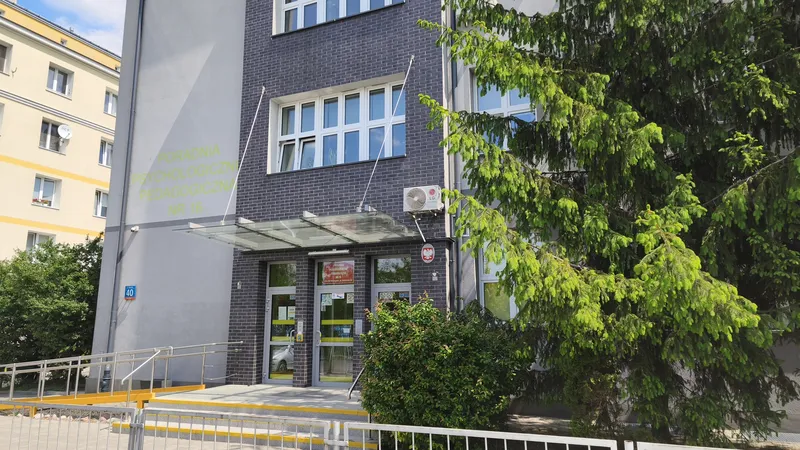
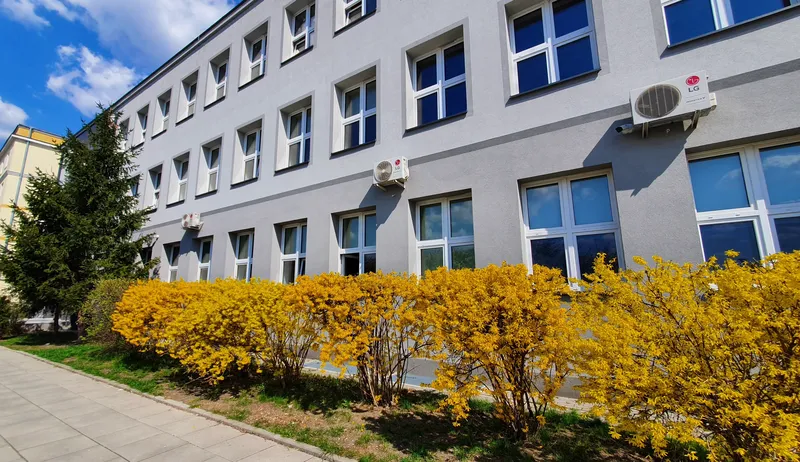
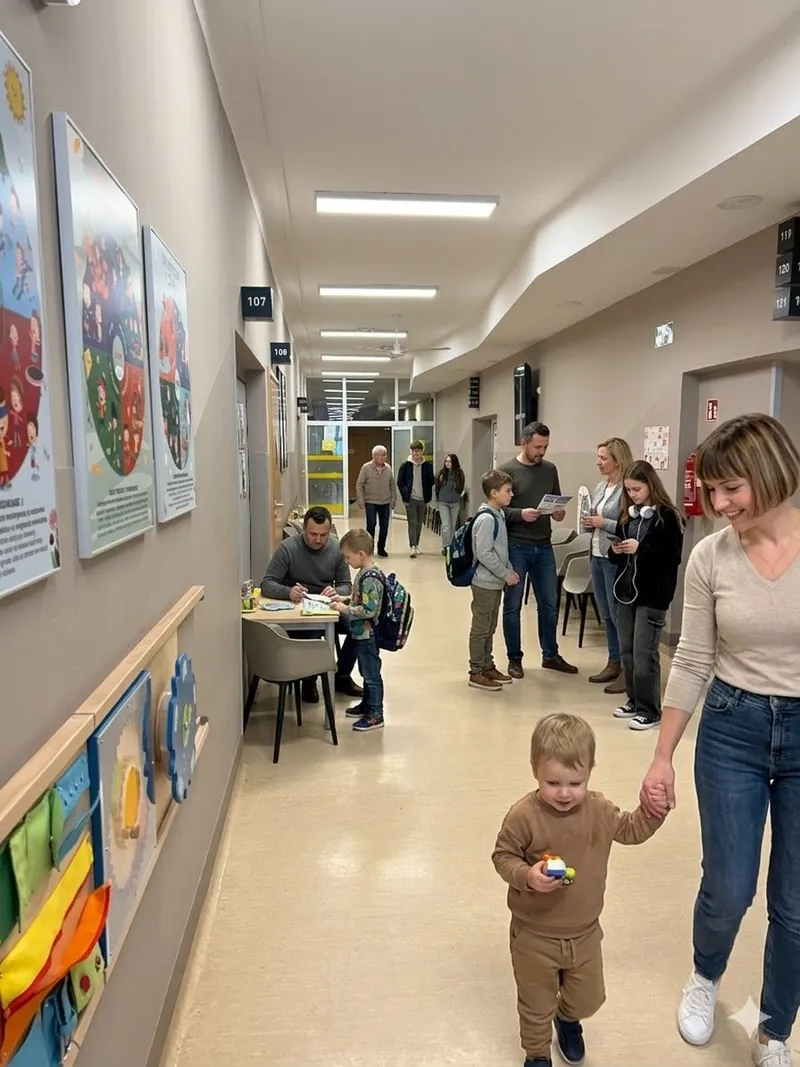
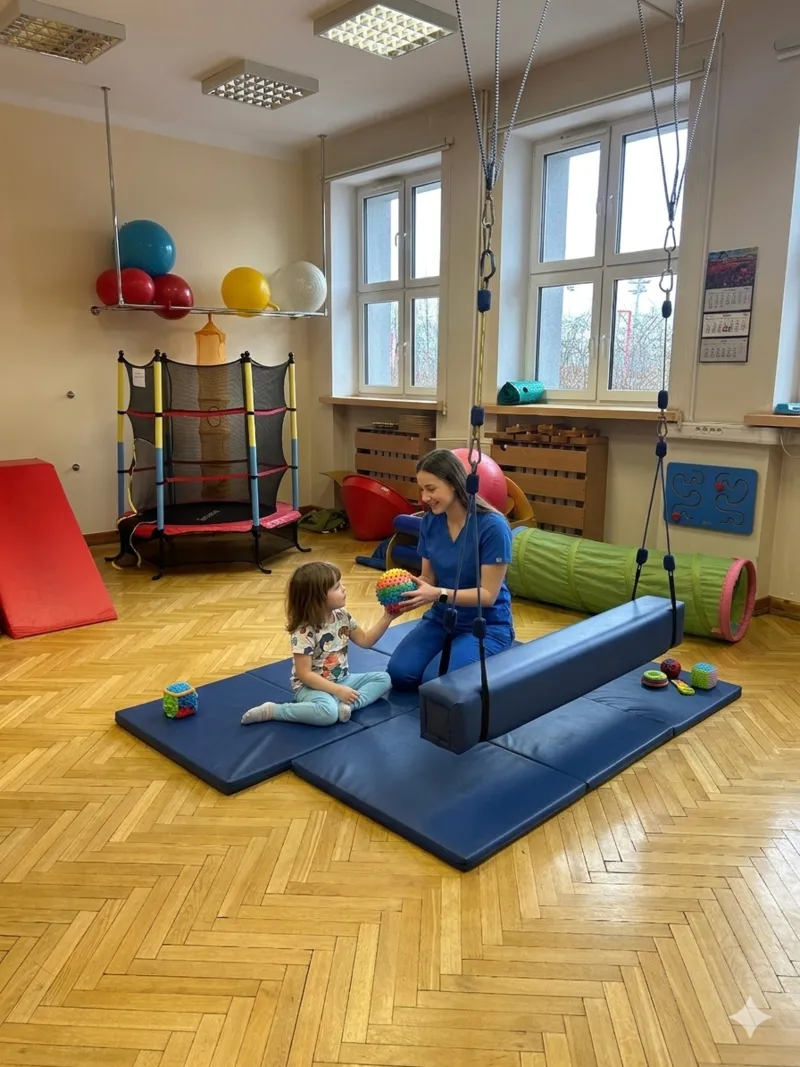
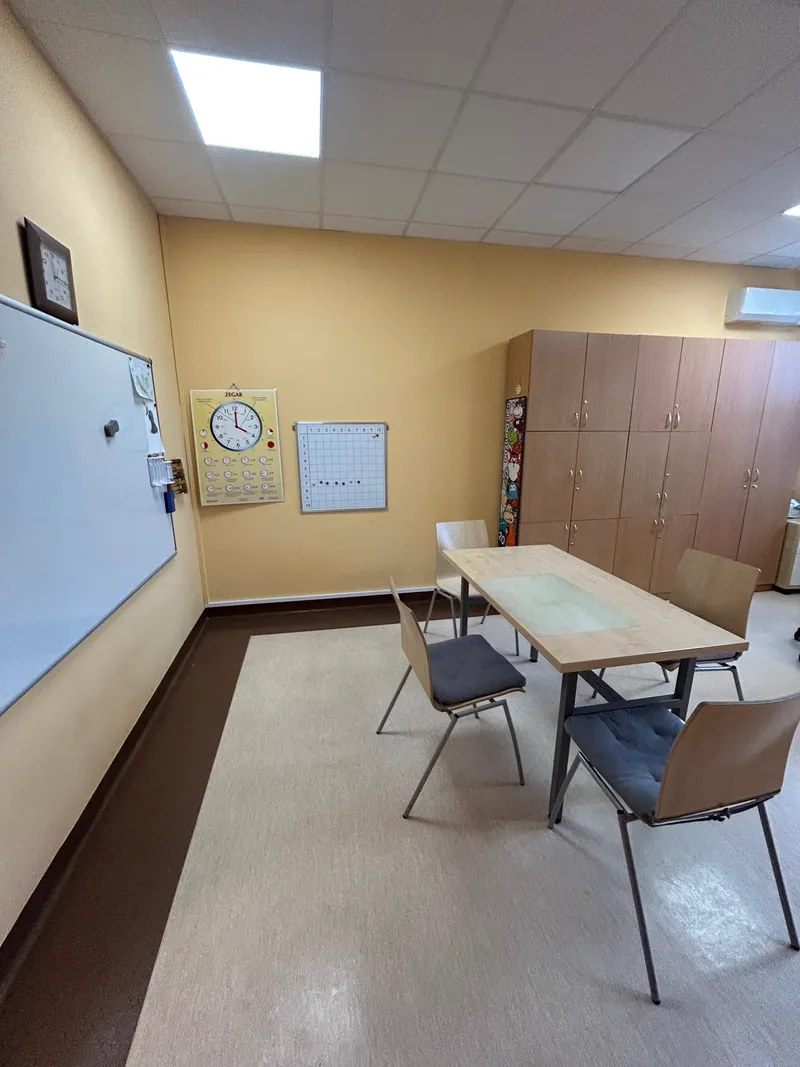
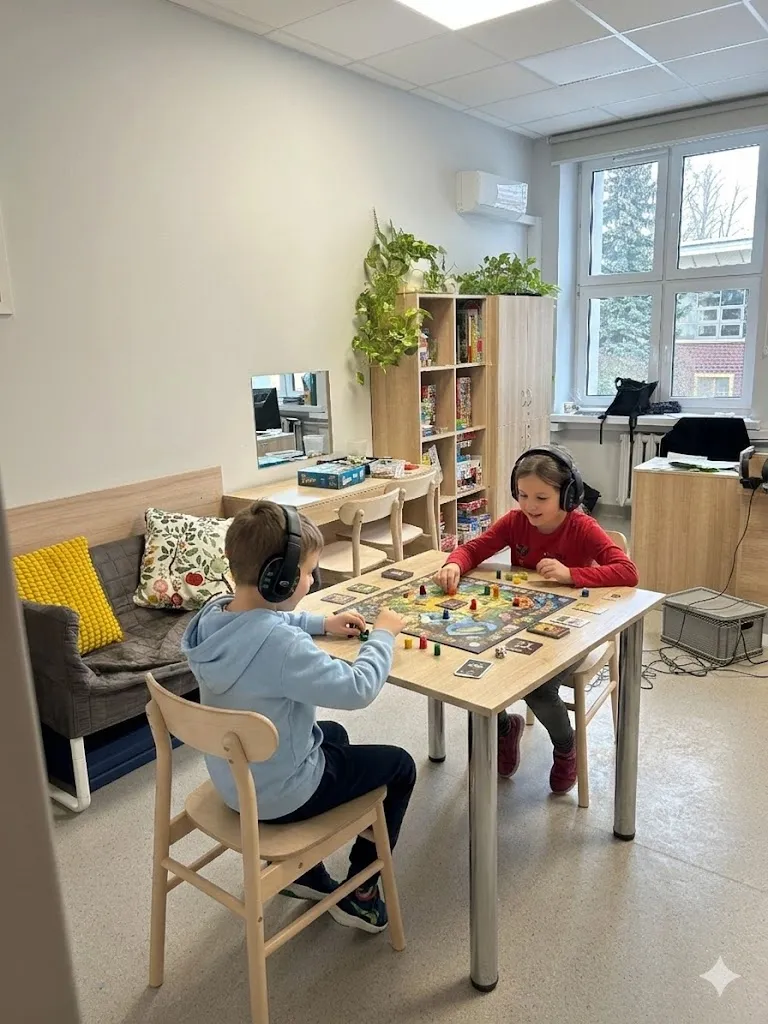
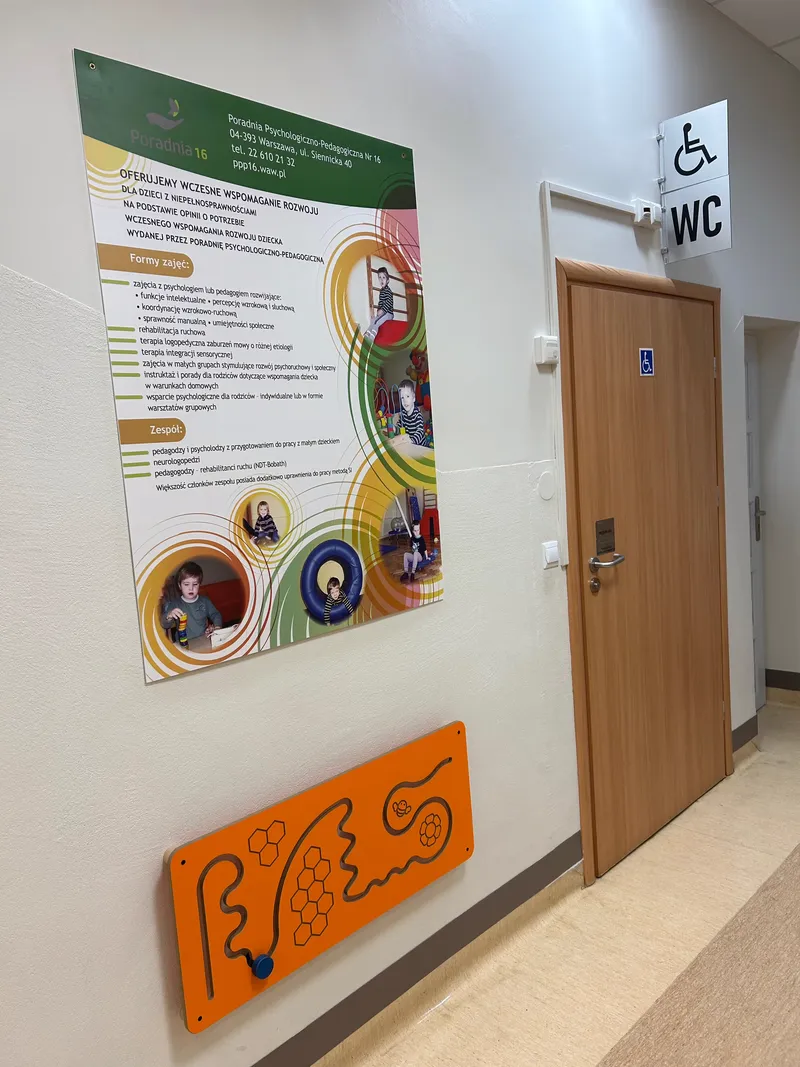
Get to know our Centre
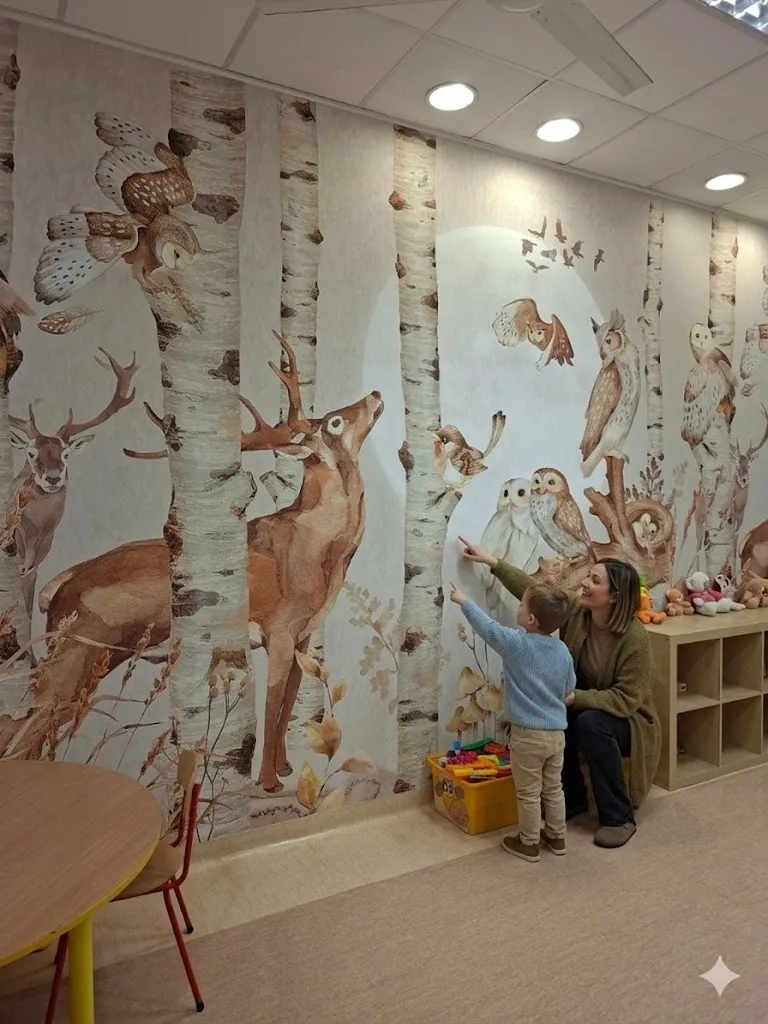
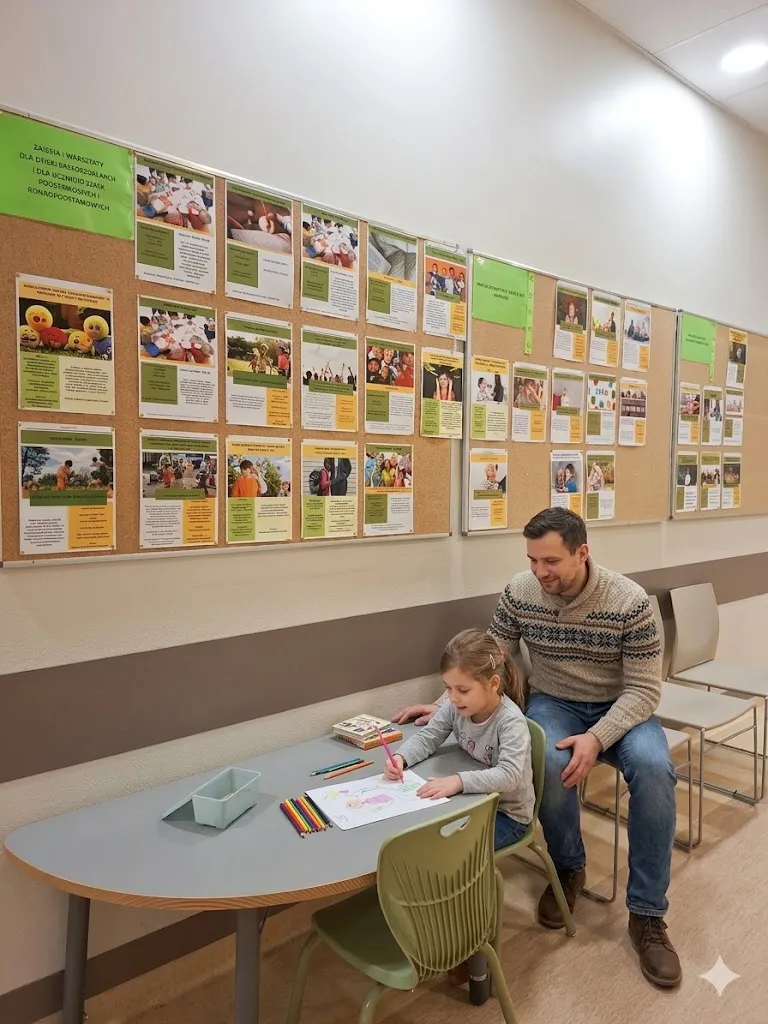
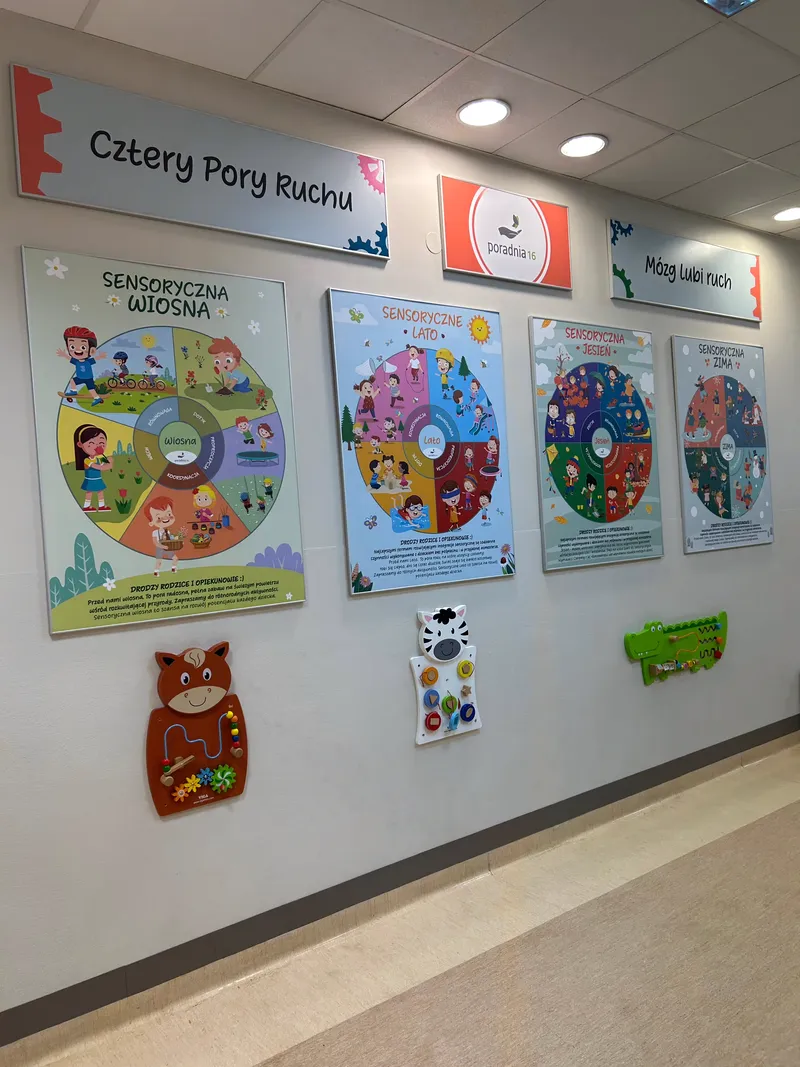
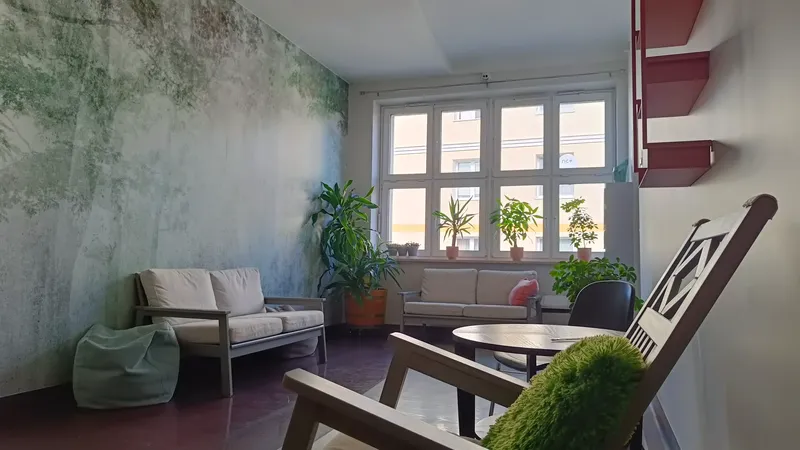
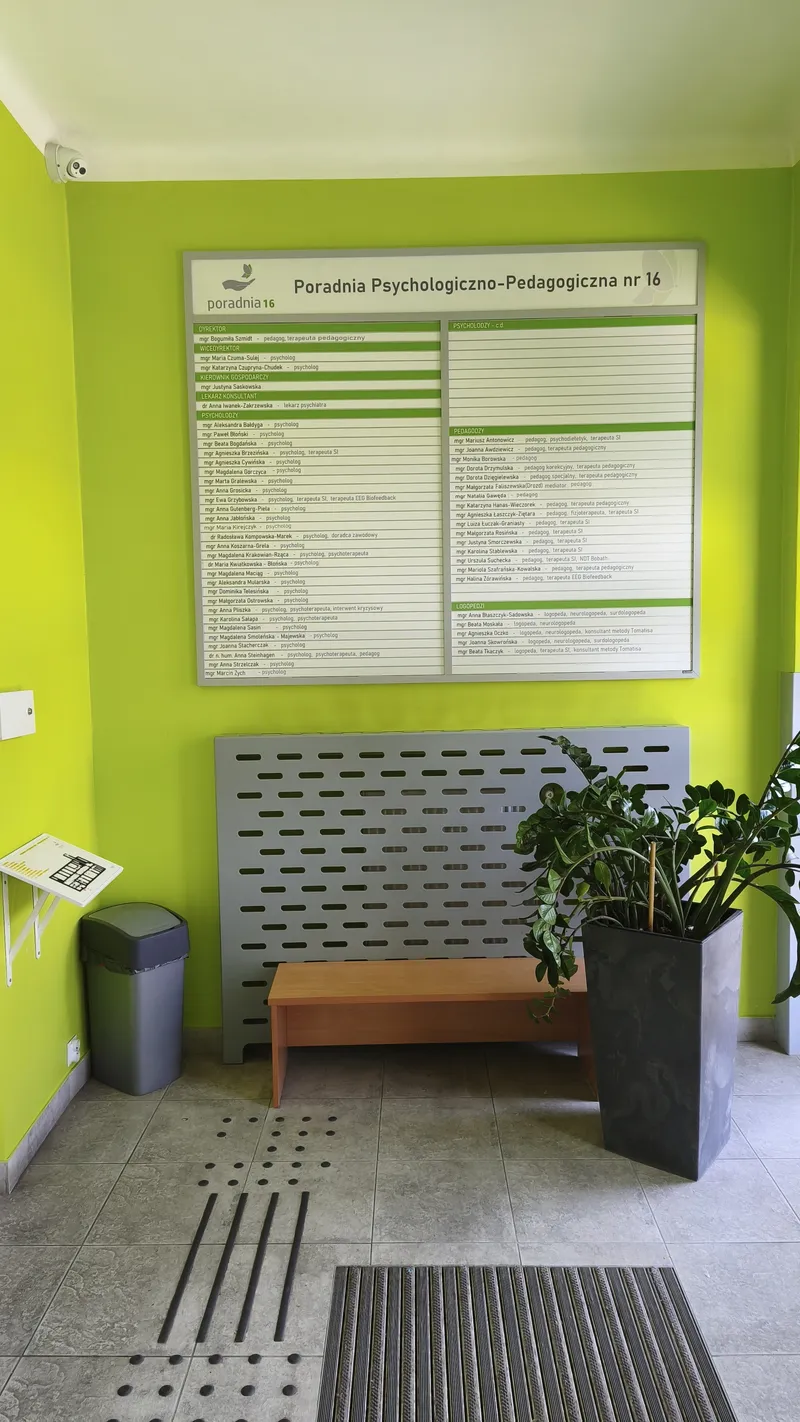
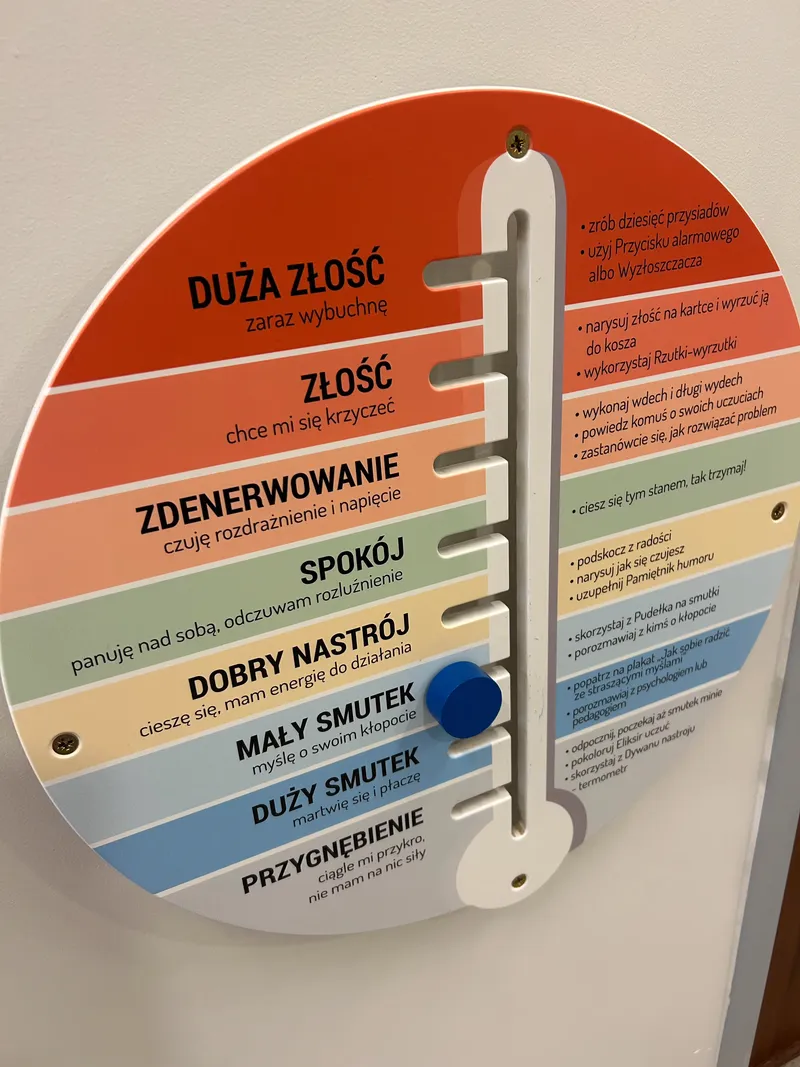
See what our consulting and therapy rooms look like.
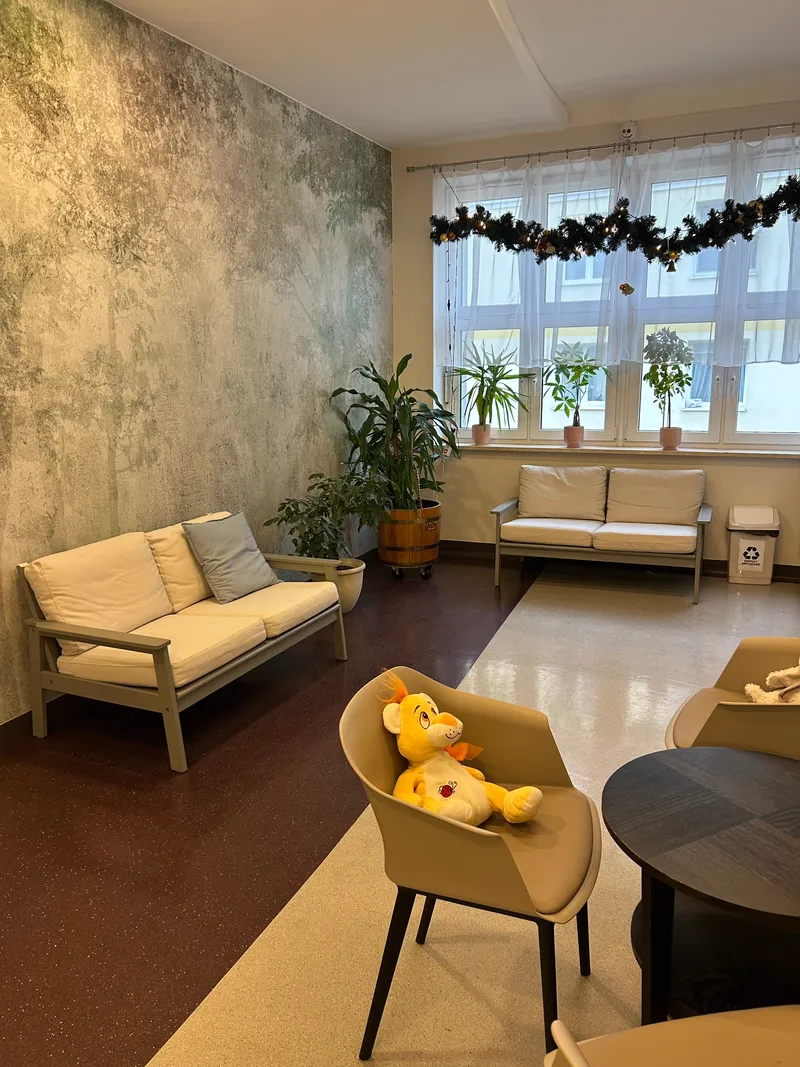
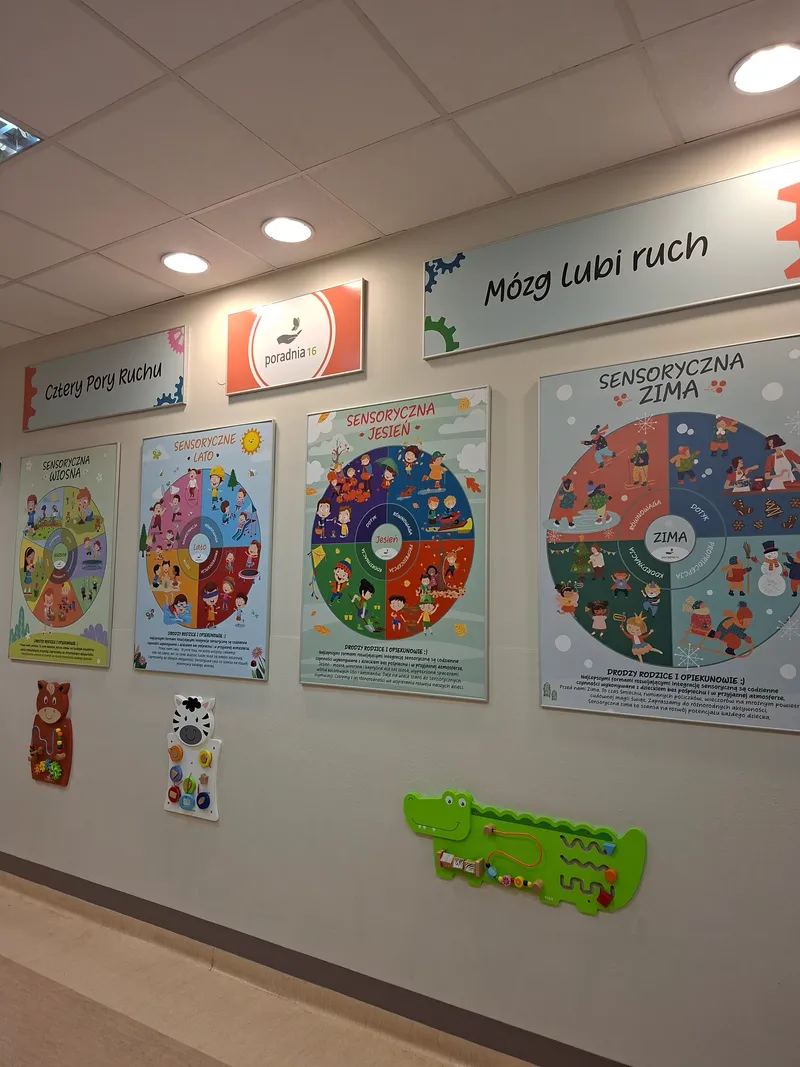
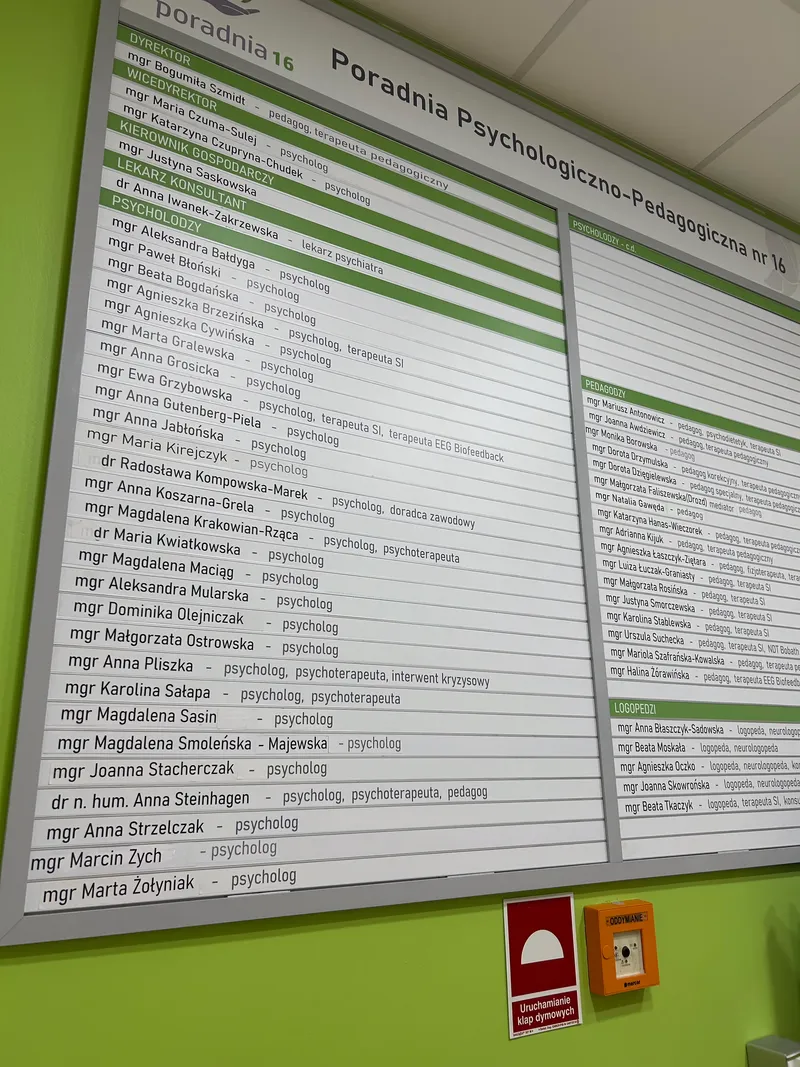
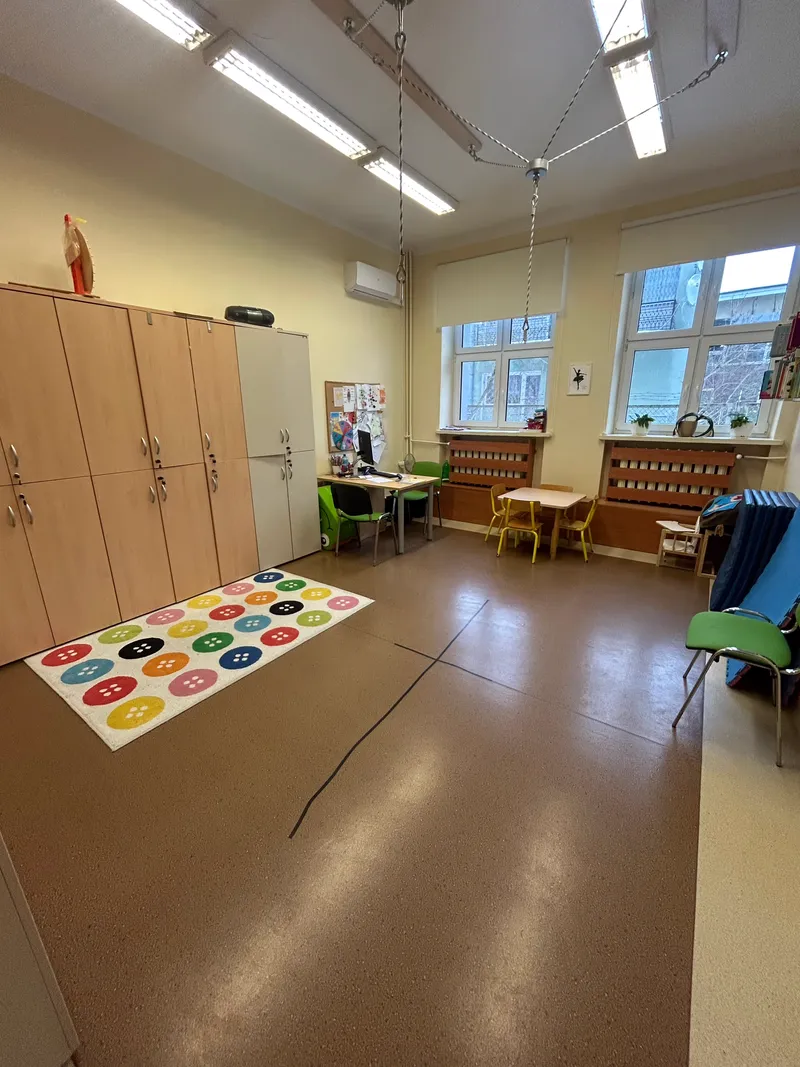
News
What's new at the Centre? Here you will find information about upcoming events, new classes and important announcements.